
Verified buyer
The itch on his mane has settled
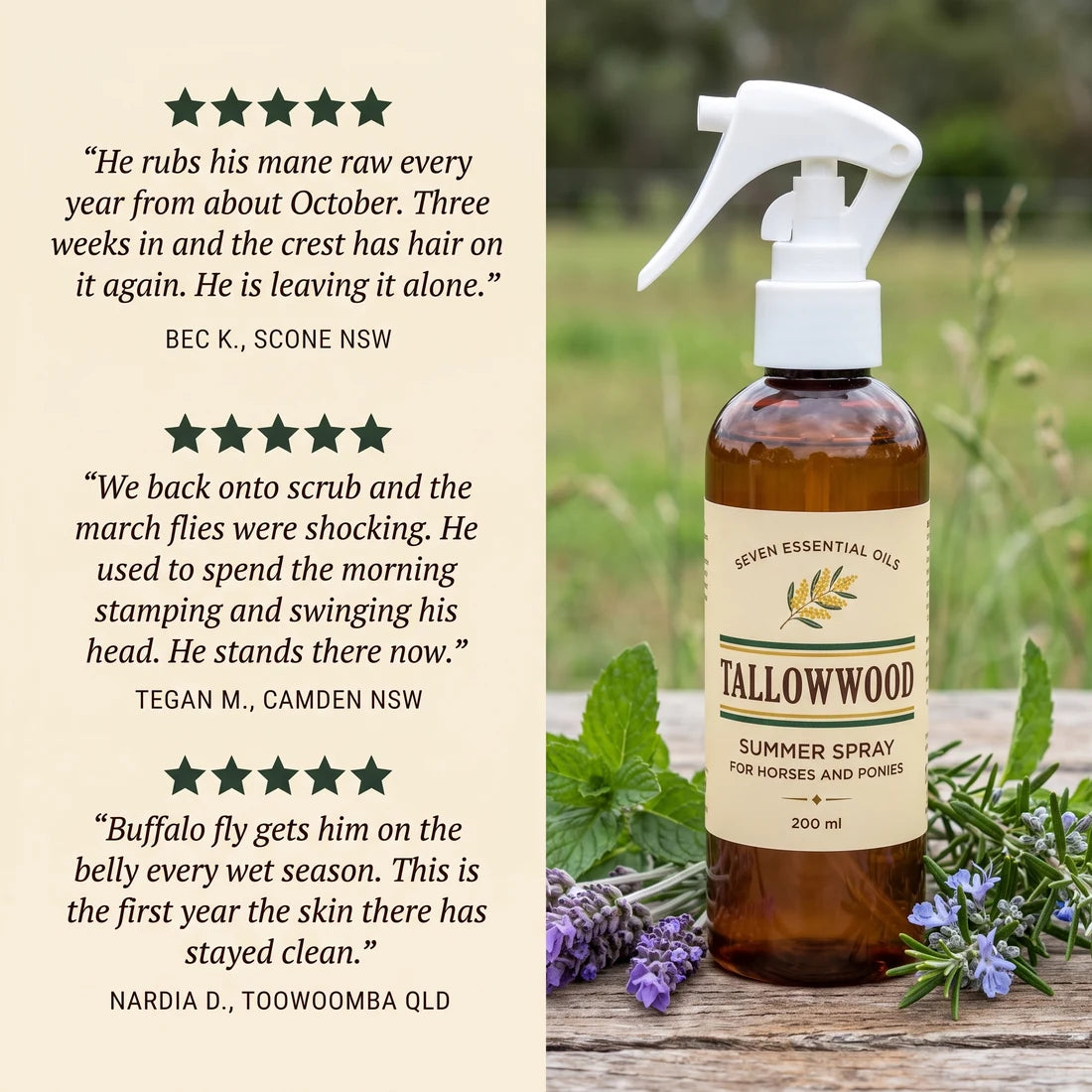
He rubs his mane raw every year from about October. Three weeks in and the crest has hair on it again. I am not saying it fixed the itch, he still has it, but he is leaving it alone.
BBec K.Scone, NSW



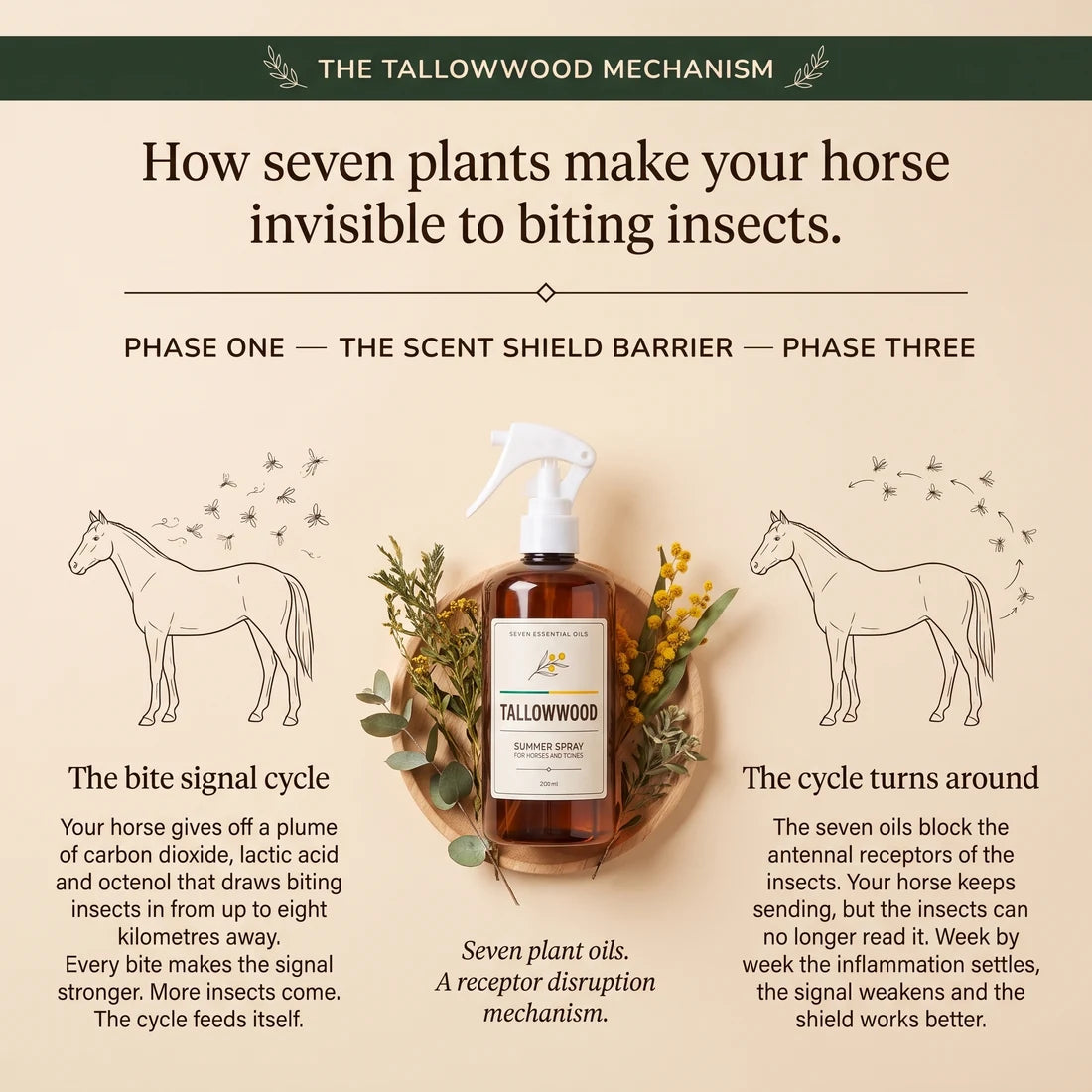
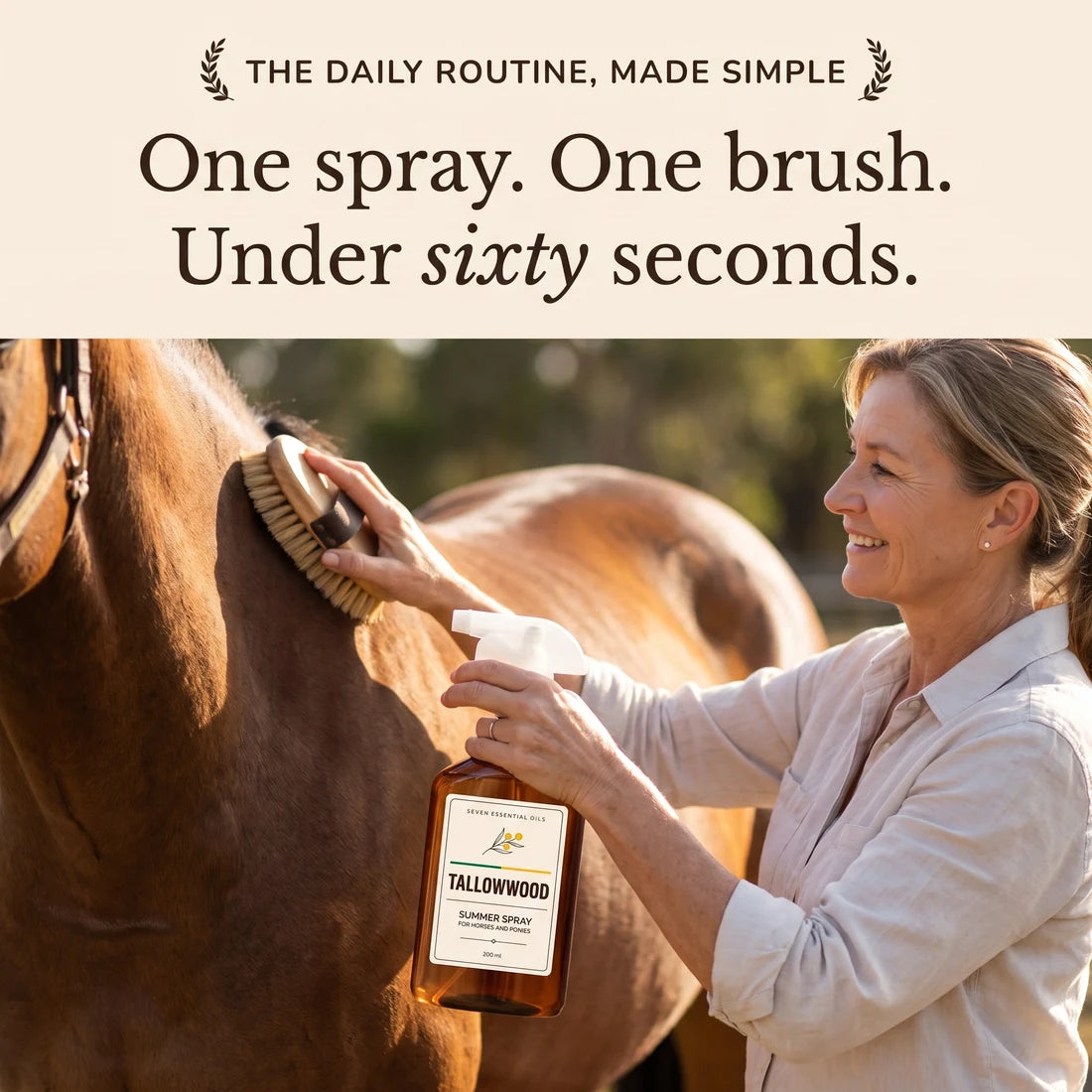
Your horse leaves a scent trail behind him, and that trail is what the flies, the march flies and the midgies follow. The spray lays itself over the top of it.

Your horse leaves a scent trail behind him. Carbon dioxide from his breathing, lactic acid and moisture off his skin. It drifts on the wind, and a fly that picks it up follows it until it gets there.
That is why the first ones are on him before you have the gate shut, and why the same horse in the same paddock gets hit while the one next to him is left alone.
The seven oils work a step earlier than that. They lay a scent layer of their own around the horse, and the trail underneath is harder to read.
This is how the product is meant to work, not a promise of a particular result. Horses are different, and how much stays in the coat differs from horse to horse.
You can read the ingredients out to your kid. Every line of it.
The one most people know, and the one the bottle is built around.
A lemon scented oil from the fruit of a small Asian tree.
Warm and heavy, and it carries a long way in the coat.
Sharp and herbal, the note you smell first when you open the bottle.
Cool on the skin and the reason it smells clean rather than medicinal.
An Australian oil, from a tree that grows on this coast.
Rounds the rest off so the whole thing is not just sharp.
That is the whole list. No permethrin. No pyrethroids. No DEET. No added fragrance.

Both of them sit on the same shelf at the produce store, and both have riders who swear by them. The difference is where they do their work.
The oils settle to the bottom between goes. Turn the bottle over a few times.
First time out, do a patch the size of your palm on the neck and give it half an hour.
Mane, withers, poll, chest, belly and down the legs, and along the tail dock. Around the head you spray it into a cloth and wipe it on.
Once in the morning is enough on an ordinary day. After rain or a sweaty ride you go again.
Never spray towards the eyes. If your horse has a wound, broken skin or a skin condition, ask your vet first.


The main fly season runs from November through April, and in the north it barely lets up at all. March flies are about from early spring, the midgies come through in waves at dawn and dusk, and buffalo fly sits on the belly and the shoulders right through the wet.
A morning takes 7 ml, about a teaspoon and a half. A 200 ml bottle gives you 28 mornings, so one bottle is four to six weeks for one horse, depending how much you ride and how much comes off in the rain.
That works out at $1.78 a morning on one bottle, and $1.37 a morning if you take three.
The reason most riders take more than one is simple enough: nobody wants to be reordering in the middle of February, which is when it is at its worst.
He rubs his mane raw every year from about October. Three weeks in and the crest has hair on it again. I am not saying it fixed the itch, he still has it, but he is leaving it alone.
We back onto scrub and the march flies were shocking. He used to spend the morning stamping and swinging his head. He stands there now.
Buffalo fly gets him on the belly and the inside of the legs every wet season. This is the first year the skin there has stayed clean.
It works, and I will buy it again, but 200 ml does not last me five weeks. I have a big warmblood and I do his legs properly, so I am through a bottle in about a month. Order two.
The last one I used left him with flaky skin down the shoulders and he flinched when I got near him with it. This one he stands for.
She has always been funny about the hissing. It is a softer spray and she keeps her head down now, which on its own was worth it.
The midgies here come through at dusk and go for the poll and the tail. Doing him before I turn out of a morning has made a real difference by evening.
Fair warning, it is a strong smell when it goes on. Clove and thyme, you can pick it. It settles after an hour and I have got used to it, but the first morning I did wonder.
I do both of mine, the pony gets about half what the gelding does. A bottle every three weeks or so across the two of them and I am happy with that.
I emailed and asked before I used it near the foal and they came back the same day, from six weeks. I did a patch test first anyway. No reaction and no flies on her face.
The old one went tacky by lunchtime and the dust stuck to him. This one dries and that is the end of it.
Honest answer: it is very good on the small stuff and only alright on march flies. On a bad day the big ones still have a go at him. Everything else it handles.
I still rug him, that has not changed. But the bits the rug does not cover are not raw any more, and that is the whole reason I bought it.
It comes off in a wash, which sounds like a complaint and is not. I know what is on him and I know when it is gone.
Through the wet up here nothing lasts, and I do him again after the afternoon storm. Two goes a day in February, one the rest of the time. Three bottles got me through.
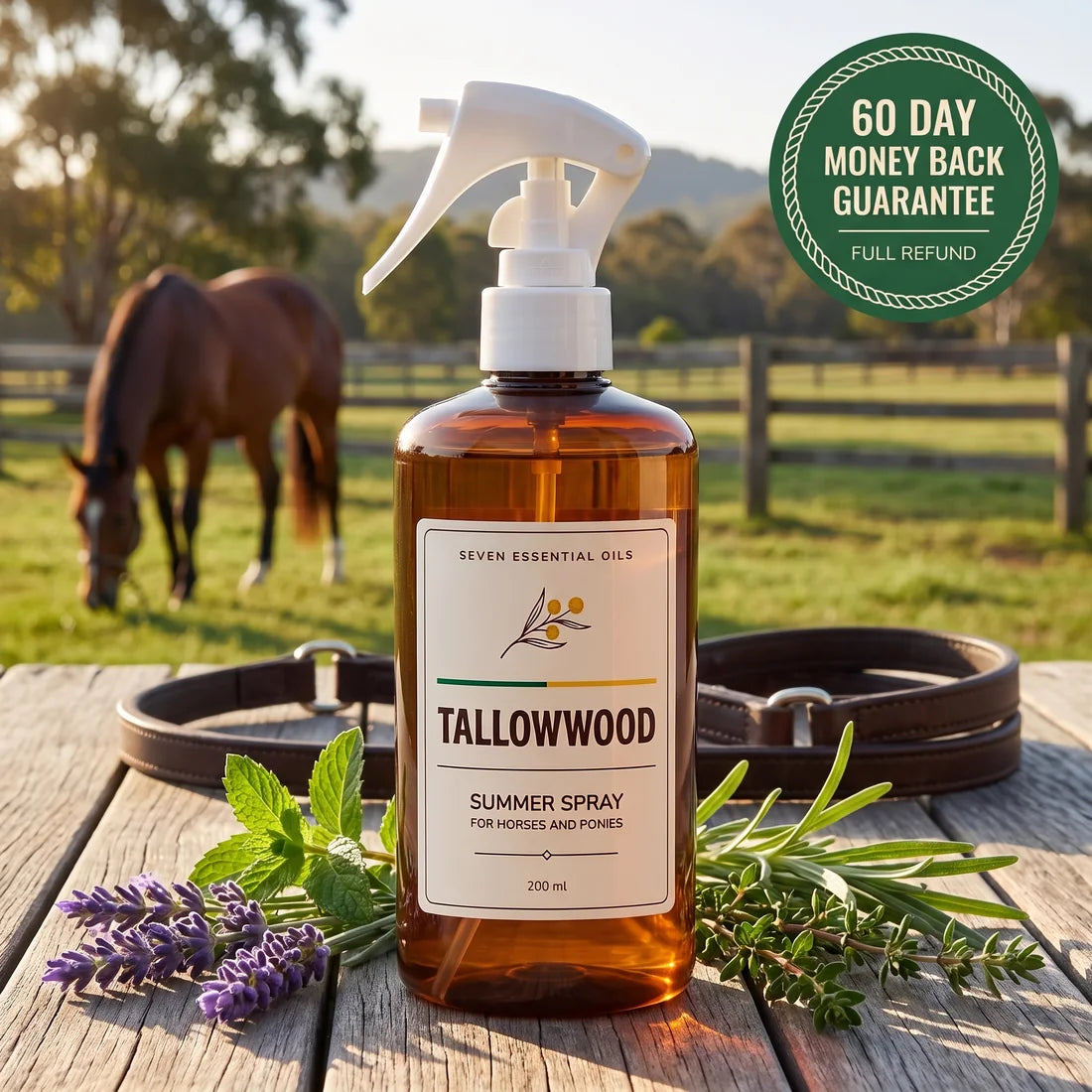
Use it for sixty days. If your horse is not clearly less bothered, email us and you get your money back in full. We pay the return postage, and the bottle can be open and half used.
That sits on top of your rights under the Australian Consumer Law, it does not replace them.

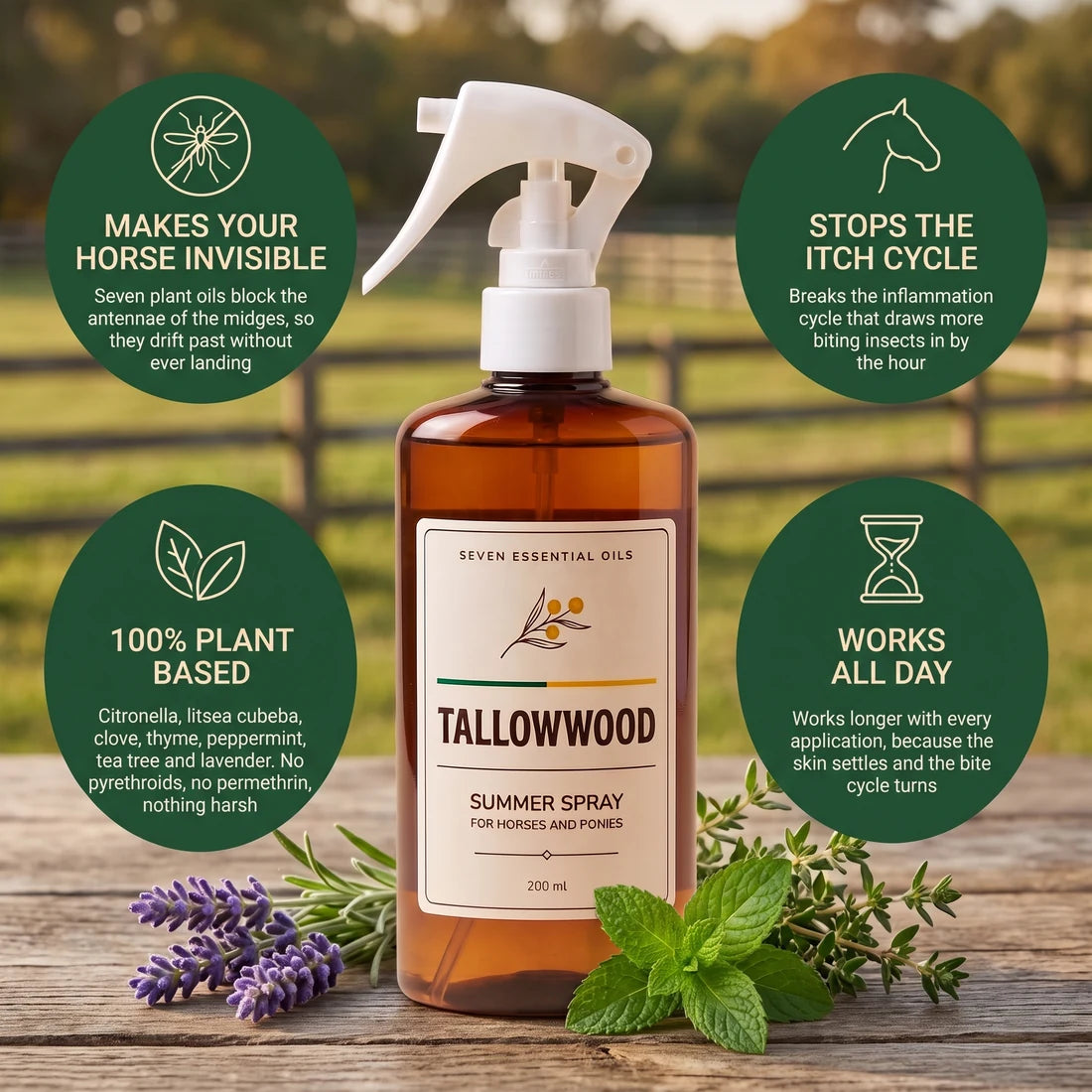
Seven essential oils in a water base: citronella, litsea cubeba, clove, thyme, peppermint, tea tree and lavender. No permethrin, no other pyrethroids, no DEET and no added fragrance. The full list is printed on the label.
Once in the morning on an ordinary day. After rain or a sweaty ride you go again. In the middle of the wet season a lot of riders do a second go in the afternoon.
A morning takes about 7 ml for one horse, so a 200 ml bottle gives you 28 mornings, four to six weeks for one horse. A big horse whose legs you do properly will go through it quicker.
Foals from six weeks and older horses are fine. If the mare is in foal, ask your vet first. Whatever the horse, do a patch the size of your palm and give it half an hour before you do the rest.
It is not a treatment for Queensland itch and we do not sell it as one. What it does is sit on the places the midgies go for, the mane, the withers, the poll and the tail dock, so there is less landing on him in the first place. If the skin is already broken or weeping, see your vet before you put anything on it.
Flies, march flies, midgies, mozzies and stable fly. It is not a tick product and we do not sell it as one.
Standard delivery is $9.95, and free on orders over $75. We dispatch within 2 business days and your parcel arrives in 3-4 business days after dispatch. Express delivery is $14.95 and takes 1-2 business days. For regional and remote postcodes, please allow an additional 2-5 business days. You get a tracking number by email as soon as the parcel leaves us.
No. There is no subscription. You order once, and that is the end of it.
60 day money back guarantee · free delivery on orders over $75
Add to cart